When investing in luxury engineered wood, parquet, or luxury vinyl tiles (LVT) for high-end residential or commercial properties in Gauteng, subfloor flatness is paramount. Any minor floor deflection or bump will telegraph through the finished floor, causing hollow spots, joint failure, and clicks. A self-leveling sub-floor screed is the mandatory preparation step.
What is Self-Leveling Screed?
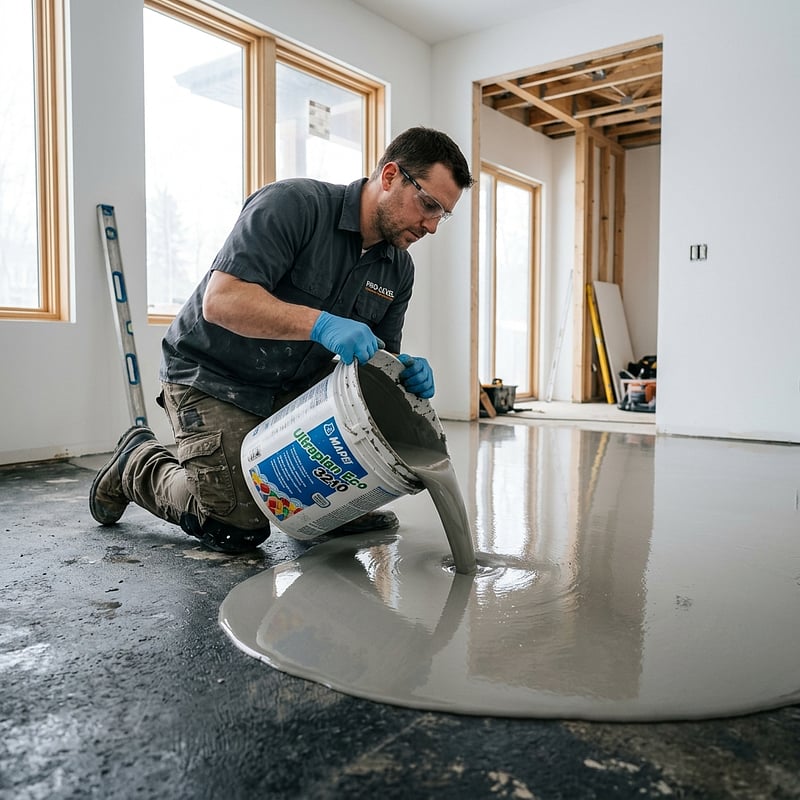
Unlike traditional sand-cement screeds which must be manually troweled and are prone to unevenness, self-leveling compound is a polymer-modified cementitious material. It flows like water when mixed, naturally finding the lowest points of the subfloor to create a flat, level plane with a tolerance of less than 2mm over a 3-meter straight edge.
Why Prepping Matters for LVT and Wood
Without a flat screed base, luxury flooring products face severe installation risks:
- Locking System Stress: Click-lock joints on vinyl or wood planks will bend and break under pedestrian weight if there is a subfloor void.
- Adhesive Failures: Glue-down LVT requires 100% adhesive transfer. Voids mean unbonded tiles that peel or shift.
- Acoustic Noise: Hollow subfloor cavities amplify footfall noise, destroying the premium feel of a luxury property.
FloorLab applies advanced rapid-hardening self-leveling screeds across Pretoria and Johannesburg, allowing installation of top coats within 24 to 48 hours. Secure your flooring investment with precision prep.